
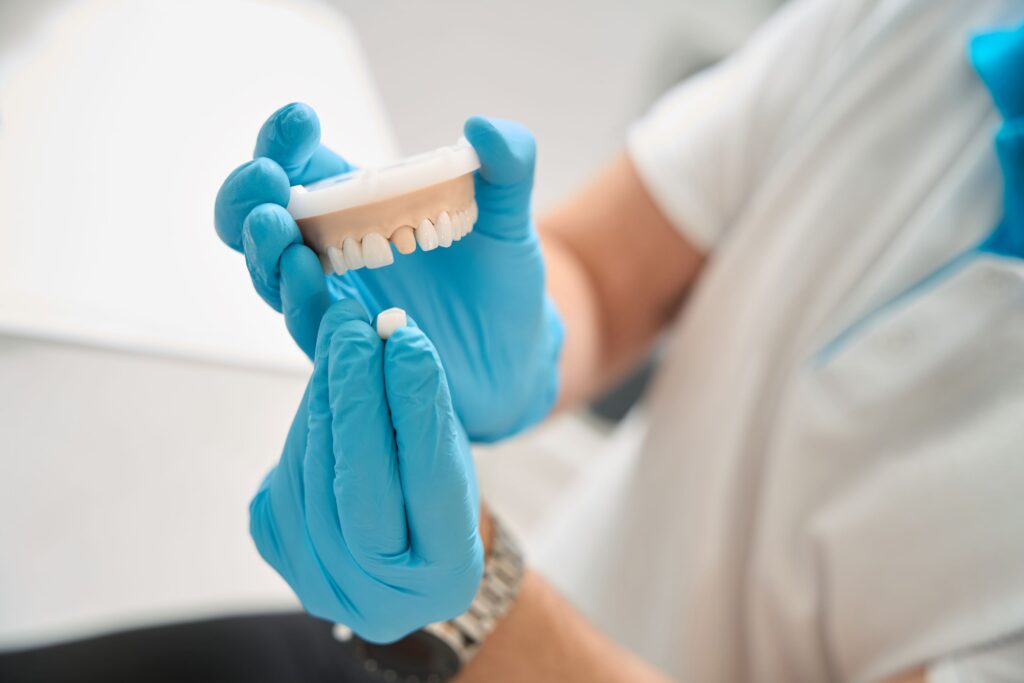
Do you have a severely damaged or decayed tooth, or do you have an infection requiring a root canal procedure? If so, your dentist will likely recommend a dental crown to protect your injured tooth, restore its appearance, and allow you to continue using it normally.
Although many people consider these tooth-shaped caps to be a modern development, the truth is that dental crowns have a long and varied history. Continue reading to learn more about how these popular prosthetics evolved over time!
When Were Dental Crowns Invented?
Plenty of people assume that contemporary dental concepts, like treating injured teeth, haven’t been around that long, but nothing could be further from the truth! Archaeologists have discovered evidence of ancient cultures attempting to repair and replace damaged or missing teeth as far back as 200 AD, when it’s believed the Etruscans of ancient Italy attempted to rebuild their smiles with precious materials, such as gold or ivory, or with the teeth of other animals or people.
However, it’s believed that the earliest attempts at dental restorations were likely intended to be more aesthetic than functional, because the human mouth rejects many materials, so these earliest attempts likely wouldn’t have been strong enough to bite or chew.
How Did Dental Materials Develop?
Throughout the centuries, as oral healthcare practices continued to spread and evolve, physicians, scientists, and dentists experimented with restorations made from different materials. For example, in the 1800s, Dr. Charles H. Land patented the porcelain jacket crown, which was made of ceramic and could improve a tooth’s appearance, but tended to crack under pressure.
Then, in the 1980s, Corning Inc. developed the first synthetic dental crowns made from glass and ceramics that looked lifelike, were biocompatible, could withstand greater bite force, and resisted chemical erosion. This paved the way for the resilient, lifelike coverings we’re more familiar with today.
What Are Contemporary Dental Crowns Like?
Thanks to ongoing advancements in dental technology, materials, and techniques, these restorations are considered more realistic, comfortable, and longer lasting than in years past. For example, your dentist can provide a customized prosthetic made to match the size, shape, and hue of your natural enamel for beautiful results that boost your self-esteem. With it in place, you can continue using your damaged tooth to eat, speak, and smile as confidently as ever!
If you have a worn-down, injured, or decayed tooth and are unsure whether you’re a good candidate for a dental crown, you can learn more by scheduling a consultation with your dentist!
About the Practice
At Canyon Creek Family Dentistry of Richardson, patients of all ages benefit from a team of providers eager to help them build and maintain happy, healthy smiles. Our providers share decades of combined experience and can collaborate to provide a comprehensive menu of services, including customized dental crowns, tailored to meet your unique needs. Then, they utilize advanced technology to improve patient comfort while delivering beautiful, accurate treatment results intended to last. You can request an appointment on the website or call (972) 644-3800.