
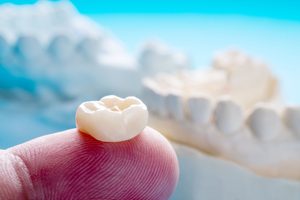
Do you have a damaged, aching, or infected tooth, or have you recently undergone a root canal? If so, your dentist will likely recommend placing a one-of-a-kind dental crown over the affected tooth.
These restorations are made from resilient, customizable materials like ceramic and let you keep using an injured tooth to eat, speak, and smile normally in situations that might otherwise require extraction and replacement. But they haven’t always been so functional or reliable. Read on to learn how dental crowns have evolved over time!
When Were the First Dental Crowns Made?
It’s tempting to think of dental services, such as lifelike dental crowns, as a more contemporary invention. But the truth is that humans have been seeking solutions to protect or replace damaged teeth for thousands of years.
For example, archaeologists have found evidence that the ancient Etruscans used valuable materials, like gold, ivory, and bone, to try to craft replacement teeth as early as 200 AD. However, these early prosthetics were likely meant to be more of an aesthetic solution, because they were fragile and therefore probably weren’t suitable for biting or chewing. That means these gold restorations may have served more as status symbols than as functional replacement teeth.
What Materials Have Been Used for Dental Crowns?
Gold remained a popular material for dental crowns for hundreds of years. Then, in the 1700s, the dentists of the time began experimenting with white enameling over them to try to make them look more lifelike. But it wasn’t until the late 1880s that Dr. Charles H. Land patented the porcelain jacket crown, which fully covered the damaged enamel with a tooth-colored cap. Unfortunately, these were prone to chipping and cracking, which could harm the underlying tooth and surrounding gum tissues.
Then, in the 1980s, Corning Inc. became the first company to produce synthetic restorations made from glass and ceramics. These biocompatible materials looked natural and resisted more pressure than before, which paved the way for dental crowns as we know them today.
What Are Dental Crowns Like Today?
Thanks to continuing advances in dental technology, materials, and techniques, these restorations today are more lifelike, accurate, resilient, and comfortable than in the past.
For instance, many providers use digital X-rays for more accurate images and impressions of your teeth to create better-fitting dental crowns that feel more comfortable once they’re cemented in place. These are usually made with resilient ceramics that are durable enough to withstand the pressure of daily biting and chewing, and can potentially last 15+ years when cared for correctly.
If you have other questions about the dental crown process or what to expect, contact your dentist’s office directly to learn more!
About the Practice
Patients at Canyon Creek Family Dentistry of Richardson benefit from a team of dentists who are dedicated to helping them enhance their lives by improving their dental health. They collaborate to offer a comprehensive menu of services, including customized, tooth-colored dental crowns, using advanced technology for more comfortable, accurate outcomes that are meant to last. You can request an appointment on the website or by calling (972) 644-3800.