
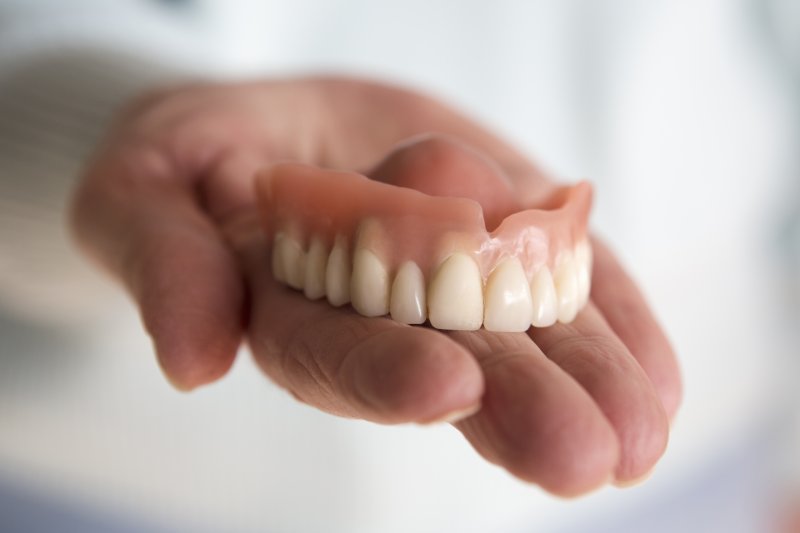
Dentures have come a long way from ivory bases used in the ancient world, but what has occurred to get these teeth to where they are today? Read on to learn more about their evolution and how you can benefit.
The First-Known Dentures
Although dentists didn’t exist in 700 BC, the ancient Etruscans still built the first set of dentures. Using a gold band and animal or human teeth, pins helped hold the denture in place. As you can guess, these were not always successful.
However, it didn’t stop other cultures from trying. In Japan, the oldest set of full dentures was created with teeth crafted from wood. Instead of being attached to gold, the people relied on natural suction to hold them in place – a method still used today.
Modern Dentistry Comes Forth
By the 18th and 19th centuries, dentures were no longer reserved for the rich (because of the gold band required). Instead, they were now more affordable. As more people consumed sugar and developed dental decay, these prosthetics became more common and necessary to address tooth loss.
Thanks to technological advances at the time, dentures were crafted from a variety of materials, including ivory. Animal teeth were no longer considered an option, so dentists used those from fallen soldiers who had perished in wars during the 1700s and 1800s.
In fact, Alexis Duchateau fabricated the first set of porcelain dentures in 1774. By 1850, the Goodyear family developed vulcanite. This hard rubber was used as a base, ensuring the porcelain teeth remain stable. The integration of these two materials made dentures fully customizable and more affordable for individuals.
The Dentures of Today
After vulcanite was discovered, dentures remained unchanged for a long time. It wasn’t until the 20th century that they took on a new form, one that would launch them into the prosthetics they are today.
With plastic becoming the primary material for affordable dentures, dentists stopped using human teeth and instead relied on enhanced X-rays and digital imaging to create custom restorations for patients.
However, in the 1950s, things changed again with the discovery of dental implants. Swedish orthopedic surgeon Dr. Per-Ingvar Branemark realized that titanium rods and bone integrated well together. Creating what he declared as an “unbreakable bond,” they are now the basis for what we see today.
From wood, ivory, and animal teeth to acrylic resin, porcelain, and titanium rods, dentures have come a long way, making them a transformative and reliable tooth replacement solution for patients in need.
About the Author
Dr. Afshin Azmoodeh, or “Dr. A” as his patients know him, has been providing exceptional dental care to Richardson families for nearly 20 years. With fully customized dentures for patients who have lost teeth, he can rebuild smiles that look natural, feel comfortable, and work like new. If you are tired of dealing with the challenges that come with tooth loss, contact us at (972) 644-3800 to schedule an appointment.